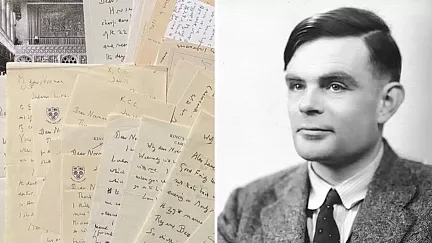
The brilliant mathematician who cracked the “unbreakable” Enigma code.
Introduction: The Brilliant Mathematician Who Cracked the “Unbreakable” Enigma Code
Alan Mathison Turing (1912-1954) stands as one of the most influential figures in the history of mathematics, computer science, and cryptography. His contributions during World War II at Bletchley Park, where he played a crucial role in breaking the German Enigma code, are estimated to have shortened the war by several years and saved countless lives. Yet Turing’s significance extends far beyond his wartime achievements. He was a visionary who laid the theoretical foundations for modern computing and artificial intelligence, concepts that would not become reality until decades after his death.
Turing’s genius lay in his ability to approach complex problems with mathematical rigor and creative insight. As a student at King’s College, Cambridge, he proved the central limit theorem in probability theory, a result that had previously been proven only under more restrictive conditions. His doctoral work at Princeton University with Alonzo Church established him as one of the leading mathematical logicians of his generation.
When World War II broke out, Turing’s talents were directed toward the urgent problem of breaking German military codes. The Enigma machine, used by the German military to encrypt their communications, was considered unbreakable by conventional means. The machine’s complex system of rotors and plugboards created an astronomical number of possible encryption settings, making brute force approaches impractical with the technology of the time.
Turing’s approach to breaking Enigma was characteristically mathematical and innovative. Rather than relying solely on traditional cryptographic techniques, he developed new mathematical methods and mechanical devices to attack the problem. His work on the Bombe, an electromechanical device that could systematically test Enigma settings, was crucial to the success of the codebreaking effort at Bletchley Park.
Beyond his practical contributions to the war effort, Turing’s theoretical work laid the foundation for the digital age. His 1936 paper “On Computable Numbers” introduced the concept of the Turing machine, a theoretical device that could perform any computation that could be described algorithmically. This abstract concept became the foundation for the theory of computation and influenced the development of actual computers.
Tragically, Turing’s life ended in persecution and tragedy. In 1952, he was prosecuted for homosexuality, which was illegal in Britain at the time. Given the choice between imprisonment and chemical castration, he chose the latter. He died in 1954, apparently by suicide, at the age of 41. His treatment by British authorities stands as a stark reminder of the prejudice and injustice that can destroy even the most brilliant minds.
The recognition of Turing’s contributions came slowly. The secrecy surrounding his wartime work meant that his achievements were not fully known until decades after his death. It was only in the 1970s and 1980s, as the classified documents from Bletchley Park were gradually declassified, that the full extent of his contributions became apparent.
Today, Turing is celebrated as a pioneer of computer science and artificial intelligence. The Turing Award, established in 1966, is considered the highest honor in computer science. The Turing Test, proposed in his 1950 paper “Computing Machinery and Intelligence,” remains a benchmark for evaluating machine intelligence. His theoretical work continues to influence research in computer science, mathematics, and cognitive science.
Turing’s legacy also includes important lessons about the relationship between individual genius and institutional support. His achievements were made possible by the collaborative environment at Bletchley Park, where brilliant minds from diverse backgrounds worked together toward a common goal. At the same time, his tragic end demonstrates how institutional prejudice and legal persecution can destroy human potential.
Understanding Alan Turing’s contributions requires appreciating both his technical brilliance and his historical context. He was a mathematician who applied rigorous logical thinking to practical problems, a codebreaker who saved lives through intellectual achievement, and a visionary who glimpsed the future of computation. His story is a testament to the power of human intelligence and a cautionary tale about the dangers of prejudice and persecution.
The Enigma Machine: Germany’s Complex Cipher Device
The Enigma machine was a sophisticated electromechanical cipher device that the German military used to encrypt their communications during World War II. Considered unbreakable by conventional cryptographic methods, Enigma represented the pinnacle of pre-digital encryption technology. Its complex system of rotors, plugboards, and electrical circuits created an astronomical number of possible encryption settings, making brute force attacks practically impossible with the technology available at the time.
The basic principle of the Enigma machine was relatively simple: it substituted each letter of the alphabet with another letter according to a specific pattern. However, the machine’s complexity arose from its multiple layers of encryption and the way these layers changed with each letter typed. This dynamic encryption meant that the same plaintext letter would be encrypted differently each time it appeared in a message, making frequency analysis—the traditional method for breaking substitution ciphers—ineffective.
The heart of the Enigma machine was its system of rotors. Each rotor was a wheel with 26 electrical contacts on each side, connected by wires in a scrambled pattern. When a key was pressed, an electrical signal would pass through the rotors, which would scramble the signal according to their internal wiring. After passing through all the rotors, the signal would hit a reflector, which would send it back through the rotors by a different path, and finally light up a lamp indicating the encrypted letter.
The rotors were the key to Enigma’s security. There were typically three or four rotors in military versions, and each rotor could be set to one of 26 starting positions. After each letter was typed, at least one rotor would advance by one position, changing the encryption for the next letter. Some rotors would also cause the next rotor to advance after a complete rotation, similar to an odometer. This mechanical complexity meant that the encryption pattern changed continuously throughout a message.
An additional layer of complexity came from the plugboard, a panel of sockets that allowed operators to swap pairs of letters before and after the rotor encryption. A typical military Enigma machine had 10 pairs of letters connected on the plugboard, meaning that 20 letters were swapped with their partners. This feature dramatically increased the number of possible encryption settings and was one of the most challenging aspects of breaking Enigma for the codebreakers.
The mathematical complexity of Enigma was staggering. With three rotors selected from a set of five, each with 26 possible starting positions, and a plugboard with 10 pairs of letters swapped, the total number of possible settings was approximately 158 million million million (1.58 × 10²⁰). This number was so large that trying every possible setting, even with mechanical assistance, would have taken centuries with the technology available in the 1940s.
The German military enhanced Enigma’s security by changing the daily settings according to codebooks. Each day, operators would set their machines according to the settings listed for that date, ensuring that all messages sent that day used the same encryption. However, the codebreakers at Bletchley Park exploited the fact that these settings were often predictable or could be deduced from operator habits and message patterns.
Different versions of the Enigma machine were used by various branches of the German military. The army and air force used a three-rotor version, while the navy used a more complex four-rotor version for their most sensitive communications. The naval Enigma was particularly challenging to break and required special efforts from the codebreakers, including capturing codebooks and machines from disabled German vessels.
The Enigma machine also had certain weaknesses that the codebreakers exploited. The fact that a letter could never be encrypted as itself (due to the reflector design) provided a crucial clue for eliminating possible settings. The predictable nature of certain message formats, such as weather reports that contained standard phrases, also provided cribs—known or guessed plaintext—that could be used to break the encryption.
Understanding the Enigma machine required the codebreakers to combine mathematical analysis with practical intelligence work. They needed to understand the machine’s mechanical operation, analyze the patterns in intercepted messages, and develop methods for systematically testing possible settings. This interdisciplinary approach, combining pure mathematics with applied cryptography, was essential to the success of the Bletchley Park effort.
The Enigma machine represented the peak of mechanical cryptography, but it also highlighted the limitations of purely mechanical approaches to encryption. The same complexity that made it secure also made it vulnerable to mathematical analysis and mechanical decryption methods. The eventual breaking of Enigma demonstrated that no cipher, no matter how complex, could withstand sustained mathematical and computational attack.
The legacy of the Enigma machine extends beyond its role in World War II. It demonstrated the importance of mathematical methods in cryptography and showed that mechanical devices, no matter how complex, could be analyzed and broken with sufficient mathematical insight. The efforts to break Enigma also drove the development of early computing technology, as the codebreakers needed more powerful machines to test the vast number of possible settings.
Today, the principles behind the Enigma machine are studied in cryptography courses as examples of both good and flawed cipher design. While the machine’s complexity was impressive for its time, modern cryptographers understand that true security requires mathematical principles that are resistant to computational attack, not just mechanical complexity. The story of Enigma serves as a reminder that encryption security must be based on sound mathematical foundations rather than just apparent complexity.
Bletchley Park: The Top-Secret Efforts of Turing and His Team
Bletchley Park, a Victorian mansion in Buckinghamshire, England, was the secret headquarters of the Government Code and Cypher School (GC&CS) during World War II. This unassuming estate became the birthplace of modern computing and signals intelligence, housing the largest concentration of brilliant minds working to break Axis codes in the history of warfare. The work conducted at Bletchley Park, including Alan Turing’s crucial contributions, is estimated to have shortened the war by several years and saved millions of lives.
The choice of Bletchley Park as the codebreaking center was partly accidental. The estate was located at the intersection of major railway lines, making it accessible to personnel from London and other parts of Britain. Its relative isolation provided the necessary secrecy, while the mansion and its outbuildings could accommodate the growing workforce. The site’s history as a girls’ school and its spacious grounds made it adaptable for the unique requirements of wartime codebreaking.
Security at Bletchley Park was paramount. Personnel were sworn to secrecy and told only what they needed to know for their specific tasks. The work was compartmentalized, with different teams working on different codes and ciphers. Even within teams, information was carefully controlled to minimize the damage that could result from capture or betrayal. This culture of secrecy was so effective that many of the codebreakers’ achievements remained classified for decades after the war.
The workforce at Bletchley Park was remarkably diverse for its time. While it included many mathematicians and classical scholars, it also employed linguists, chess masters, crossword puzzle experts, and even musicians and artists. This diversity was essential because codebreaking required different skills for different aspects of the work. Mathematical analysis was crucial for understanding the structure of ciphers, but pattern recognition, language skills, and creative thinking were equally important.
Alan Turing arrived at Bletchley Park in 1939, shortly after Britain declared war on Germany. He was assigned to work on the Naval Enigma, the most challenging of the German cipher systems. Turing’s approach was characteristically mathematical and systematic. He developed new techniques for analyzing the structure of the Enigma encryption and designed mechanical devices to automate the process of testing possible settings.
One of Turing’s first major contributions was the improvement of the Bombe, an electromechanical device originally designed by Polish cryptographers. The Bombe could systematically test Enigma settings by simulating the encryption process and looking for contradictions that would indicate an incorrect setting. Turing’s improvements to the Bombe made it much more efficient and effective, allowing the codebreakers to process vast numbers of possible settings in a reasonable time.
The work at Bletchley Park was highly collaborative, despite the compartmentalization required for security. Teams would share insights and techniques, and breakthroughs in one area would often lead to advances in others. The informal atmosphere, with its mix of brilliant minds from diverse backgrounds, fostered innovation and creativity. Regular meetings and informal discussions were crucial for sharing knowledge and solving difficult problems.
The Hut system at Bletchley Park reflected the specialized nature of the work. Different huts housed teams working on different aspects of codebreaking. Hut 8, where Turing worked, focused on Naval Enigma. Hut 6 worked on Army and Air Force Enigma. Other huts handled different codes and ciphers, including the complex Lorenz cipher used for high-level German communications.
The daily routine at Bletchley Park was intense and demanding. Teams worked in shifts around the clock, analyzing intercepted messages and running the Bombes to test possible settings. The pressure was enormous, as timely decryption of German communications could provide crucial intelligence for military operations. The codebreakers understood that their work could directly affect the outcome of battles and the lives of soldiers.
One of the most significant achievements at Bletchley Park was the breaking of the Lorenz cipher, used by the German High Command for their most sensitive communications. This effort, led by Max Newman and involving Tommy Flowers, resulted in the development of Colossus, the world’s first programmable electronic computer. While Turing was not directly involved in the Colossus project, his theoretical work on computation influenced its development.
The intelligence produced at Bletchley Park, codenamed “Ultra,” was among the most valuable assets of the Allied war effort. Ultra intelligence provided advance warning of German military plans, allowed the Allies to anticipate U-boat positions in the Atlantic, and gave insights into German strategy and capabilities. However, the use of Ultra intelligence had to be carefully managed to avoid alerting the Germans that their codes had been broken.
The collaboration between mathematicians, engineers, and military intelligence officers at Bletchley Park was unprecedented. The codebreakers worked closely with military commanders to ensure that their intelligence was used effectively. This cooperation between academic researchers and military planners was essential for translating mathematical breakthroughs into practical military advantages.
The working conditions at Bletchley Park were often primitive, especially in the early years of the war. The codebreakers worked in converted buildings with limited heating and lighting. The Bombes were temperamental machines that required constant maintenance. Despite these challenges, the sense of purpose and the intellectual stimulation of the work kept morale high among the staff.
The legacy of Bletchley Park extends far beyond its wartime achievements. The collaborative approach to problem-solving, the integration of theoretical and practical work, and the development of early computing technology all had lasting impacts on science and technology. Many of the people who worked at Bletchley Park went on to make significant contributions to computer science, mathematics, and other fields in the post-war period.
Today, Bletchley Park is a museum and heritage site that preserves the memory of this remarkable achievement. The story of the codebreakers and their work serves as an inspiration for future generations of scientists and mathematicians, demonstrating how intellectual achievement can have a direct and profound impact on world events.
The Turing Machine: His Theoretical Model That Became the Foundation of Computer Science
In 1936, while still a graduate student at Princeton University, Alan Turing published a paper titled “On Computable Numbers, with an Application to the Entscheidungsproblem” that would become one of the most influential works in the history of mathematics and computer science. In this paper, Turing introduced a theoretical model of computation that he called an “a-machine” (automatic machine), which later became known as a Turing machine. This abstract concept, though never intended as a blueprint for actual computers, became the foundation for the theory of computation and influenced the development of digital computers.
A Turing machine is a mathematical abstraction consisting of an infinite tape divided into cells, each of which can hold a symbol from a finite alphabet. A read/write head can move along the tape, reading the symbol in the current cell, writing a new symbol, and moving left or right to the next cell. The machine’s behavior is controlled by a finite set of states and a transition function that determines what action to take based on the current state and the symbol being read.
The power of the Turing machine concept lies in its simplicity and generality. Despite its simple components—an infinite tape, a read/write head, and a finite control mechanism—it can simulate any algorithmic process that can be described precisely. Turing showed that any computation that can be performed by a mechanical process can, in principle, be performed by a Turing machine. This insight became known as the Church-Turing thesis, named after Turing and his doctoral advisor Alonzo Church, who proposed a similar model using lambda calculus.
Turing’s original motivation for developing the machine concept was to address David Hilbert’s Entscheidungsproblem (decision problem), which asked whether there exists a mechanical procedure for determining the truth or falsity of any mathematical statement. Turing proved that no such general procedure exists by showing that the halting problem—for determining whether a Turing machine will eventually halt on a given input—is undecidable. This result demonstrated fundamental limits on what can be computed mechanically.
The concept of universality is central to Turing’s work. A universal Turing machine is one that can simulate any other Turing machine. Given a description of another machine and its input, a universal machine can mimic the behavior of that machine. This concept showed that a single machine could perform any computation that could be described algorithmically, laying the theoretical groundwork for general-purpose computers.
Turing’s work on computability theory established fundamental concepts that remain central to computer science today. The distinction between computable and uncomputable functions, the concept of algorithmic complexity, and the classification of problems according to their computational difficulty all trace their origins to Turing’s theoretical framework. These concepts provide the mathematical foundation for understanding what computers can and cannot do.
The influence of Turing machines on the development of actual computers was both direct and indirect. While early computer designers like John von Neumann were aware of Turing’s work, the immediate influence came more from engineering considerations than from theoretical models. However, Turing’s ideas about stored-program computers and his vision of machines that could perform any computation were essential for understanding the potential of digital computers.
Turing’s theoretical work also influenced the development of programming languages and software engineering. The concept that any algorithmic process can be expressed as a sequence of simple operations became fundamental to programming. The idea that programs and data could be represented in the same form (both as strings of symbols) was essential for the development of stored-program computers and modern software systems.
The mathematical elegance of Turing machines has made them a standard tool in theoretical computer science. They are used to define complexity classes, prove theorems about computational complexity, and analyze the limits of efficient computation. The P versus NP problem, one of the most important unsolved problems in computer science, is formulated in terms of Turing machines and their computational capabilities.
Turing’s work on computability also led to insights about artificial intelligence. In his 1950 paper “Computing Machinery and Intelligence,” Turing proposed what became known as the Turing Test: if a machine can engage in conversation indistinguishable from that of a human, it should be considered intelligent. This test, based on the capabilities of Turing machines, remains influential in discussions of machine intelligence.
The concept of Turing completeness has become a standard for evaluating computational systems. A system is Turing complete if it can simulate a Turing machine, meaning it can perform any computation that can be described algorithmically. Most modern programming languages and computer architectures are Turing complete, ensuring that they can express any computable function.
Turing’s theoretical work also influenced the development of computational complexity theory, which studies the resources (time and space) required to solve computational problems. The classification of problems according to their complexity—such as the classes P, NP, and PSPACE—is based on the behavior of Turing machines and provides a framework for understanding the inherent difficulty of computational problems.
The legacy of the Turing machine extends beyond computer science to encompass philosophy, cognitive science, and biology. The concept of computation as symbol manipulation has influenced theories of mind and consciousness. The idea that biological processes might be understood as computational has led to new approaches in theoretical biology and artificial life research.
Today, Turing machines remain a fundamental concept in computer science education. Students learning about algorithms, complexity theory, and the theory of computation encounter Turing machines as a way to understand the fundamental capabilities and limitations of computational processes. The enduring relevance of this 80-year-old concept testifies to the depth of Turing’s insight and the fundamental nature of his contributions to our understanding of computation.
Conclusion: Honoring the Tragic Hero Whose Work Saved Millions of Lives
Alan Turing’s life and work represent one of the most remarkable stories in the history of science and technology. His contributions to breaking the Enigma code at Bletchley Park are estimated to have shortened World War II by several years, saving millions of lives and altering the course of history. Yet his significance extends far beyond his wartime achievements. His theoretical work on computation laid the foundation for the digital age and continues to influence computer science and artificial intelligence research today.
The tragedy of Turing’s life lies not only in his early death but in the persecution he faced for his homosexuality, which was criminalized in Britain at the time. The same society that benefited from his genius treated him as a criminal, subjecting him to chemical castration and ultimately driving him to suicide. His treatment stands as a stark reminder of the prejudice and injustice that can destroy even the most brilliant minds.
Turing’s theoretical contributions to computer science were visionary. His concept of the Turing machine provided a mathematical foundation for understanding computation and established fundamental limits on what can be computed mechanically. His work on artificial intelligence, including the famous Turing Test, continues to influence debates about machine consciousness and intelligence.
The practical impact of Turing’s work at Bletchley Park cannot be overstated. His improvements to the Bombe and his mathematical insights into the structure of the Enigma cipher were crucial to the success of the codebreaking effort. The intelligence produced by this work, codenamed Ultra, provided the Allies with a decisive advantage in many key battles.
The recognition of Turing’s contributions came slowly, partly due to the secrecy surrounding his wartime work and partly due to the social attitudes of his time. It was only in the decades following his death that the full extent of his achievements became known. Today, he is rightly celebrated as a pioneer of computer science and a hero of World War II.
Turing’s story also highlights the importance of supporting and nurturing brilliant minds, regardless of their background or personal characteristics. His achievements demonstrate that intellectual diversity and creative thinking are essential for solving complex problems. The loss of his potential contributions in his later years is a reminder of how much human society can lose when it fails to protect and support its most talented individuals.